

Live dealer blackjack provides players with a more authentic casino experience than any other format of online gaming. Live dealer blackjack does not use computer generated results. Instead, every card that is dealt is drawn from a real shoe and handled by a professional dealer. This change in how players interact with the game is significant. The continuity between hands provided by the presence of physical cards removes the instant reset of outcomes found in rng blackjack. The continuity creates a sense of predictability and transparency in the game, which makes it more manageable for disciplined players.
Many players begin live blackjack with the same type of habits they have used in standard online blackjack. However, experienced players quickly learn that live blackjack requires much greater discipline and a much greater understanding of the overall game. The slower pace of live blackjack provides the time needed to thoroughly evaluate decisions. Players can track how the shoe is progressing and how the dealer’s rhythm develops. Players can also avoid impulsive decisions resulting from fast-paced gameplay. The additional time to evaluate decisions greatly enhances the accuracy of decisions and minimizes the amount of money lost to bad decisions.
Additionally, live blackjack promotes emotional control. Interacting with a real dealer, along with being part of a group of other players, creates a sense of community and therefore, a more personal experience. The realism of live blackjack can either support a player’s ability to remain disciplined or undermine it, based on the individual’s state of mind. Disciplined players remain calm and focused, and thereby, achieve a significant long-term advantage over those players who allow emotions to dictate their actions and decisions. Impulsively increasing bet sizes and abandoning sound strategy to chase an immediate loss is typical of players who react emotionally, which generally results in predictable losses.
The ability to apply strategy properly in this environment distinguishes successful blackjack players from unsuccessful ones.
Why Live Dealer Blackjack Creates Better Strategic Conditions Than RNG Blackjack
One of the least discussed benefits of live blackjack is its slower rate of play. RNG blackjack has the potential to give players hundreds of hands per hour. This fast rate of play exposes players to extreme variance, and losses accumulate much quicker during negative streaks. Live blackjack is a fraction of the speed of RNG blackjack. Tables generally turn between 40 and 70 hands per hour, based on the number of players and the speed of the dealer.
The slower pace of live blackjack inherently shields players from excessive exposure to risk. Since each hand carries inherent risk, the less hands played, the less frequent the bankroll fluctuations that occur. Additionally, the slower pace of live blackjack affords players the luxury of evaluating each decision, versus making impulse-driven decisions.
Another strategic benefit of live blackjack is the physical way cards are handled. Cards are physically drawn from a shoe, which gives players a sense of card distribution throughout the course of the game. Although casinos employ cut cards to prevent full deck tracking, players can still develop a general sense of card flow. Developing a sense of card flow improves confidence in borderline situations such as when to double down or when to split.
Finally, the transparency of live blackjack builds trust among players. Players can see each card, each shuffle, and each outcome of the game. This level of transparency decreases skepticism and allows players to focus exclusively on strategy and not on whether the game is fair.
How Live Blackjack Mechanics Influence Strategy
Live blackjack utilizes the same fundamental rules as traditional blackjack; however, the physical manner in which the cards are dealt creates several differences. The majority of live tables utilize six or eight decks. Although the house edge is slightly increased in comparison to single-deck blackjack, this is representative of standard casino practices.
A cut card is placed in the back portion of the shoe. When the cut card is reached, the dealer reshuffles all cards. This prevents full card-counting advantage; however, it still enables players to partially observe the distribution of cards in the remaining deck. Experienced players pay attention to general trends of card distribution, although they cannot accurately track the exact distribution.
Players place bets using digital interfaces for a short period of time. After bets are closed, the dealer deals cards. Players then make decisions regarding their hand using the digital interface. The dealer then executes these decisions.
The hybrid nature of live blackjack creates a unique experience. The digital interface provides players with ease of use, whereas the physical method of dealing cards provides the game with a level of realism. By understanding this system, players can identify the reasons behind the necessity of discipline and consistency in the game.
Why Basic Strategy Remains the Most Powerful Tool Available
Basic blackjack strategy is the set of mathematically-proven optimal decisions for every possible combination of hands. These decisions are based on millions of simulations of probability and statistical analysis. By adhering to basic strategy, players minimize the casino’s advantage and maximize their expected return.
Many players underestimate the amount of losses generated by incorrect decisions. For instance, standing on 16 against a dealer’s upcard of 10 may seem safer emotionally, but statistically speaking, it generates worse long-term returns than hitting. Basic strategy was developed to remove emotional bias from decision-making and replace it with mathematically-sound decision-making.
By following basic strategy consistently, players can decrease the house edge to below one percent in favorable rule conditions. As such, blackjack is one of the most player-favorable casino games available.
The difficulty lies in discipline. Many players discontinue basic strategy after a few losses and assume that the strategy chart is flawed. Short-term results do not represent long-term probabilities. Applying basic strategy consistently creates measurable long-term gains.
Professional blackjack players treat basic strategy as automatic decision-making and not as optional guidance.
Understanding When to Hit, Stand, Double Down, and Split in Real Situations
Each blackjack hand includes a decision that affects the expected return. All decisions must be made based on probability, not intuition.
Hit is required when the player’s total is weaker than the dealer’s visible upcard. For example, holding a total of 12 against a dealer’s upcard of 10 puts the player at a disadvantage. Standing will generally result in a loss since the dealer is highly likely to complete with a stronger hand. Hitting increases the player’s likelihood of achieving competitive totals.
Stand is optimal when the dealer has a high probability of busting. When the dealer’s upcard is a 5 or a 6, there is a substantial increase in the dealer’s chance of busting. Standing allows the dealer to make errors instead of taking the player’s hand at risk of busting.
Double down offers one of the greatest opportunities for profit in blackjack. When the player holds a total of 10 or 11, doubling down allows the player to increase his/her initial bet under favorable circumstances. These situations present a higher expected return, since strong totals have a high propensity of evolving into winning hands.
Splitting turns a weak hand into a stronger opportunity. Holding a pair of 8s is a weak total of 16; however, splitting creates two separate hands, each beginning at 8 and each possessing more potential.
Making these decisions may appear counterintuitive at times; however, they produce the highest statistical returns.
Card Awareness and Its Realistic Value in Live Blackjack
While full card-counting advantage is difficult to obtain in live blackjack due to limitations imposed by casinos (i.e., limiting deck penetration), players can still gather valuable information by observing card flow. Players can note sequences of cards in which multiple low cards are distributed early in the shoe. This indicates a higher concentration of high cards remaining.
High cards are advantageous to players because they increase the frequency of blackjacks and increase the number of doubling opportunities. Although this observation does not create a guaranteed advantage, it increases confidence in decision-making.
Moreover, card awareness keeps players actively engaged mentally. Passivity in blackjack leads to emotional decision-making. Card awareness fosters discipline.
Even though card awareness does not create a direct advantage, it enhances the player’s consistency.
Why Side Bets Drain Bankroll
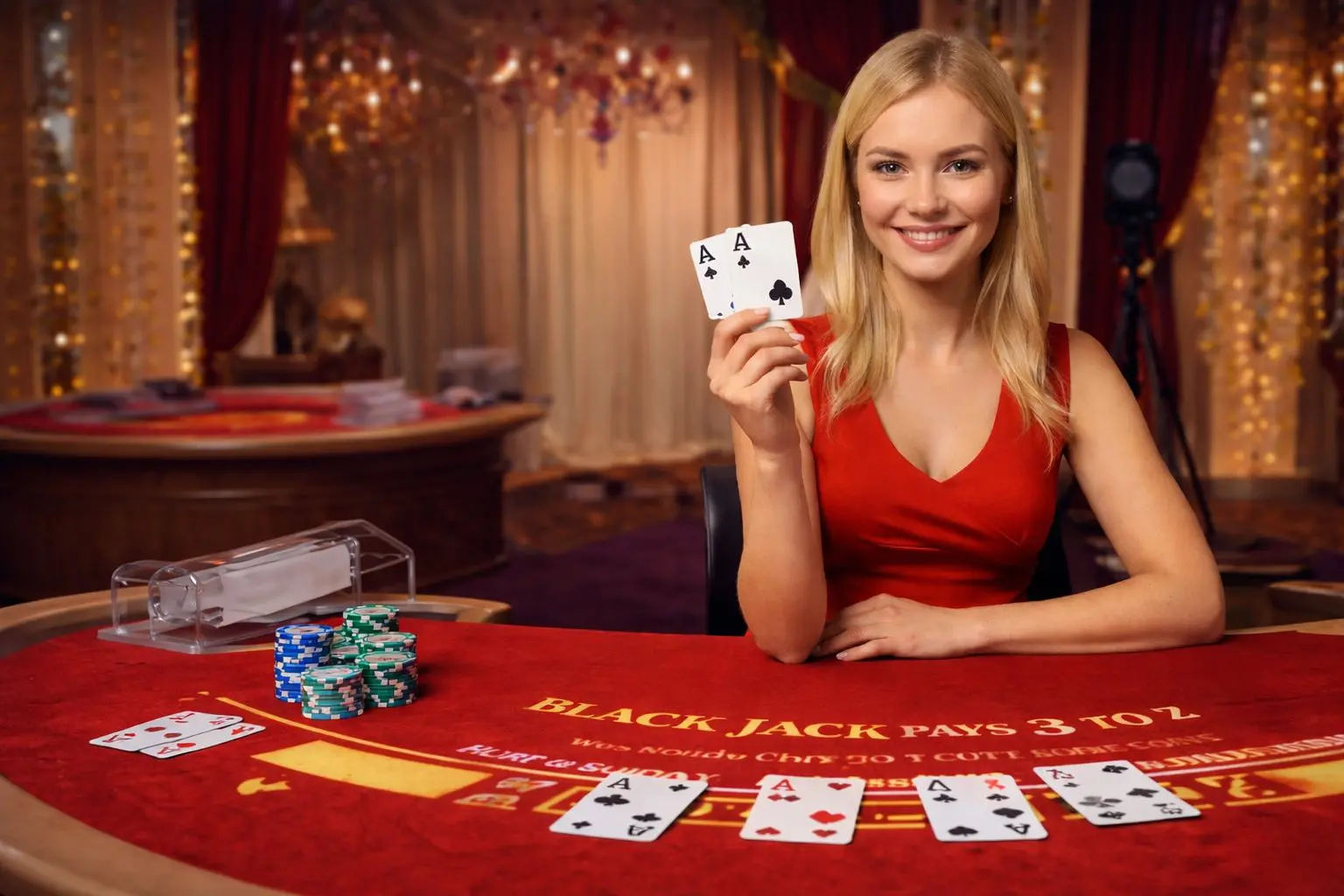
Side bets attract players with promises of large payouts. Side bets often pay 10 to 1 or greater. However, the house edge associated with side bets is significantly higher than the house edge associated with standard blackjack bets.
Side bets create excitement, but also accelerate the depletion of bankrolls over time. Players may occasionally win money on side bets, but the statistical disadvantage remains constant.
Professional blackjack players focus on the decisions related to core blackjack, and not on chasing the payouts of side bets.
Preserving Bankroll Stability and Reducing Unnecessary Risk
The primary reason to avoid side bets is to protect the stability of the bankroll and minimize the amount of unnecessary risk taken.
Proper bankroll management is what separates surviving players from players whose bankrolls are depleted. Even perfect players will experience losing streaks due to variance. Without proper bankroll management, players risk losing their entire bankroll during normal fluctuations.
Effective bankroll management consists of betting small percentages of the total bankroll for each hand. This limits losses and provides a viable path to recovery.
Impulsively increasing bet size during losing streaks accelerates the depletion of bankrolls. Maintaining consistent bet size protects against emotional mistakes.
Longevity is the hallmark of professional blackjack players. They know that as long as they survive, probability will eventually work in their favor over time.
Discipline in managing bankroll is the foundation of sustainable blackjack play.
Benefits of Multi-Hand Blackjack
Multi-hand blackjack allows players to participate in multiple hands simultaneously. The ability to play multiple hands concurrently increases the number of opportunities to capitalize on favorable situations in which the deck composition appears beneficial. There are more hands played, so there are more opportunities to take advantage of favorable card sequences and doubling opportunities.
However, multi-hand blackjack also increases exposure to losses. Negative streaks affect multiple hands simultaneously, and bankrolls deplete faster than when playing single hands. Increased volatility necessitates larger bankroll reserves to withstand normal variance.
Only experienced players use multi-hand blackjack strategically. Beginners should concentrate on playing single-handed blackjack until they establish consistent discipline and confidence.
Identifying When to Use Multi-Hand Blackjack Prevents Excessive Risk Taking
Benefits of Managing Sessions
Fatigue compromises the player’s ability to make accurate decisions. Longer sessions cause players to become emotionally unstable, leading to impulsive decision-making.
Shorter, focused sessions promote mental acuity and foster strategic consistency. Professional players restrict the length of their sessions to maintain their discipline.
Taking breaks precludes emotional escalation and promotes the quality of decision-making.
Managing sessions improves long-term performance significantly.
Live Blackjack Rewards Discipline Over Luck
Blackjack is not simply a game of luck. The player’s ability to adhere to strategy, discipline themselves, and control their emotions directly influences long-term success.
Players who adhere to basic strategy, manage their bankroll effectively, and maintain emotional balance consistently outperform casual players.
Live blackjack presents a favorable environment for players who exhibit discipline, since its slower pace allows players to deliberate thoughtfully before making decisions.
Ultimately, success in live blackjack is determined by consistency and not temporary streaks of luck.
Players who approach live blackjack with a patient and disciplined attitude will realize the greatest long-term advantages.